
[Photo by Nick Scheerbart on Unsplash]
Éomer and Aragorn leant wearily on their swords. Aragorn looked at the pale stars, and at the moon, now sloping behind the western hills that enclosed the valley. ‘This is a night as long as years,’ he said. ‘How long will the day tarry?’
J.R.R. Tolkien, ‘The Two Towers,’ from the chapter Helm’s Deep (as below)
‘Dawn is not far off,’ said Gamling, who had now climbed up beside him. ‘But dawn will not help us, I fear.’
‘Yet dawn is ever the hope of men,’ said Aragorn.
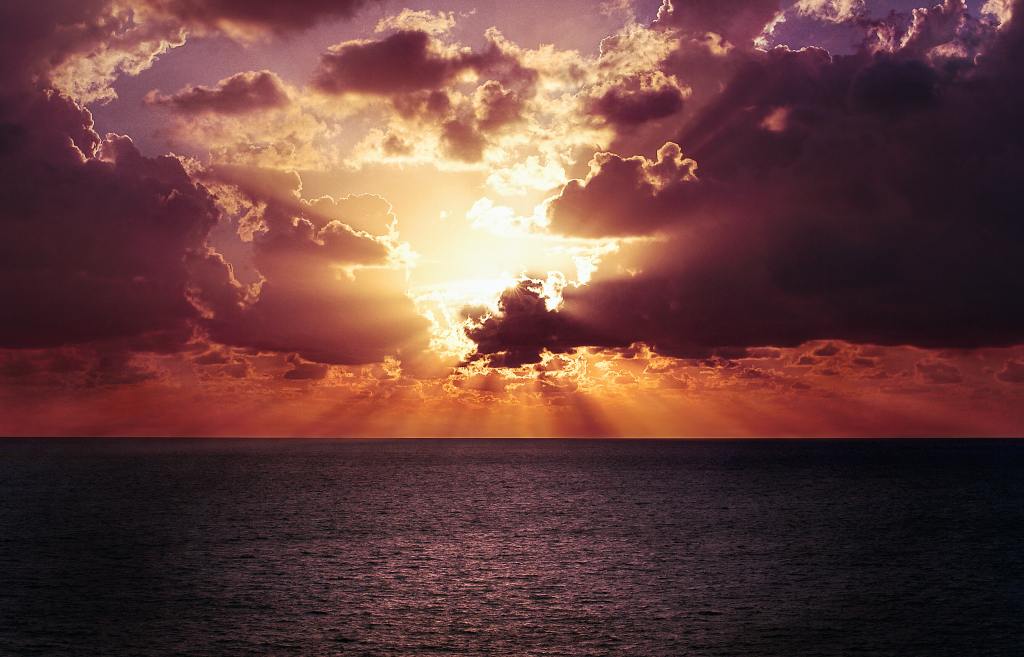
Pause. Dawn is ever the hope of men. So says Aragorn, at least, and since Aragorn says it in this way, Tolkien probably would have said it, too. It’s a statement worth contemplating. I’ve taken the liberty to compress the conversation, but this dialogue takes place during the night of the battle of Helm’s Deep, shortly before daybreak. This battle is a decidedly human struggle, a kingdom of men defending itself against destruction by the forces of evil. Aragorn does not say that dawn is the hope of Elves, Dwarves, or Valar, nor does he say that dawn is the hope of Birds and Beasts. Dawn is ever the hope of Men. Of course, he means that dawn is the hope of women, too. But why the stubborn hope, Aragorn? And what’s so especially human about the dawn? Hmmm, let’s continue…
At last Aragorn stood above the great gates, heedless of the darts of the enemy. As he looked forth he saw the eastern sky grow pale. Then he raised his empty hand, palm outward in token of parley.
The Orcs yelled and jeered. ‘Come down! Come down!’ they cried. ‘If you wish to speak to us, come down! Bring out your king! We are the fighting Uruk-hai. Bring out your skulking king!’
‘The king stays or comes at his own will,’ said Aragorn.
‘Then what are you doing here?’ they answered. ‘Why do you look out? Do you wish to see the greatness of our army? We are the fighting Uruk-hai.’
‘I looked out to see the dawn,’ said Aragorn.
‘What of the dawn?’ they jeered. ‘We are the Uruk-hai: we do not stop the fight for night or day. We come to kill, by sun or moon. What of the dawn?’
‘None knows what the new day shall bring him,’ said Aragorn. ‘Get you gone, ere it turn to your evil.’
Again, pause. Essentially, the Orcs ask the very question I have already posed: What of the dawn? I find Aragorn’s response amusing yet trite (paraphrasing now): “Well, you never know, you might lose? Better leave before that happens!” This is no satisfying answer, and the Orcs know it. But Aragorn continues…
‘Depart, or not one of you will be spared. Not one will be left alive to take back tidings to the North. You do not know your peril.‘
Ironically enough, immediately after saying this, Aragorn runs back in retreat because the Orcs blast away the gate above which he was standing. So Aragorn does not promise the Orcs defeat because he himself is winning the battle. In fact, he is not. Nor, it seems, does Aragorn promise the Orcs defeat because he knows that there is an army of Huorns coming up from behind them (although there is, as it turns out). If Aragorn did know that, then presumably he would have said to the Orcs something like (again, paraphrasing): “Hey guys, look behind you. The Huorns are coming!” He says nothing of the sort. Yet Aragorn is so confident of victory that he comes out on the wall to parley, that is, to offer the Orcs a chance to leave peacefully before they are slaughtered.
What?!?
Thoughout the entire episode, Aragorn appeals to the hope of the dawn, and I think we are meant to take him at his word. Aragorn hopes because he sees the sun rising, even though he does not yet see the sun. It’s the dawn. Dawn is ever the hope of men.
It’s not just imagery. It’s magic.
* ~~~~~ * ~~~~~ *
But what if…
What if it were true?
What if the magic of the dawn is not mere fantasy, but reality?
What if the sunrise we see every day is not just a function of bodies acting according to laws of planetary motion?
What if the dawn is, in point of fact, a function of heavenly lights obeying the very voice of God commanding them day after day after day, until the end of time?
That’s what the Bible says. Listen to it:
Thus says the Lord––
Jer 31:35-36
who gives the sun for light by day
and the statute of the moon and stars for light by night,
who stirs up the sea, and its waves roar––
the Lord of Hosts is his name:
“If these statutes depart from before me,” says the Lord,
“then also the seed of Israel will cease from being a nation before me forever.”
And the Lord smelled the pleasing aroma, and he said in his heart:
Gen 8:21-22
“Never again will I curse the ground any more for the sake of humankind,
for the intention of the heart of humanity is evil from youth.
And never again will I smite any more every living thing,
as I have done.
For all the days of the earth:
seedtime and harvest, and cold and heat,
and summer and winter, and day and night,
they will never cease.”
Cold scientific reasoning would have us take the dawn for granted, writing it off as the immutable laws of physics operating within our solar system. But the magic of faith would have us reckon the dawn as the daily renewal of God’s covenant with all creation. Read the above passage from Genesis 8 again. Note that this covenant is marked especially by God’s gracious forbearance with human violence and sin––problems that do not get better after the flood, mind you!––a covenant sealed with the promise of a rainbow.
“What of the dawn?” the Orcs ask. The Bible answers: The dawn is God, every morning, saying anew, “Let there be light!” And there is light.
It’s not darkness. It’s light. Because God is light.
It’s not science. It’s magic. Because God commands it.
It’s not law. It’s covenant. Because God always keeps His promises.
It’s not evil. It’s good. Because God is good.
What if God ever fell down on the job? got sick and was laid up in bed? took a day off?
What if God got a sudden attack of laryngitis? gave the sun and moon the silent treatment? got grumpy and just decided not to talk that day?
What if God ever broke his promise? What if, at bottom, God isn’t good?
What if, one day, the sun just happened NOT to rise?
What then?
No, really…what would happen?
* ~~~~~ * ~~~~~ *
Arise, shine, for your light has come, and the glory of the Lord has [dawned] upon you.
Isa 60:1-3
For behold! darkness covers the earth, and thick darkness the peoples;
but upon you the Lord is [dawning], and his glory is seen over you.
Nations shall come to your light, and kings to the brightness of your [dawn].
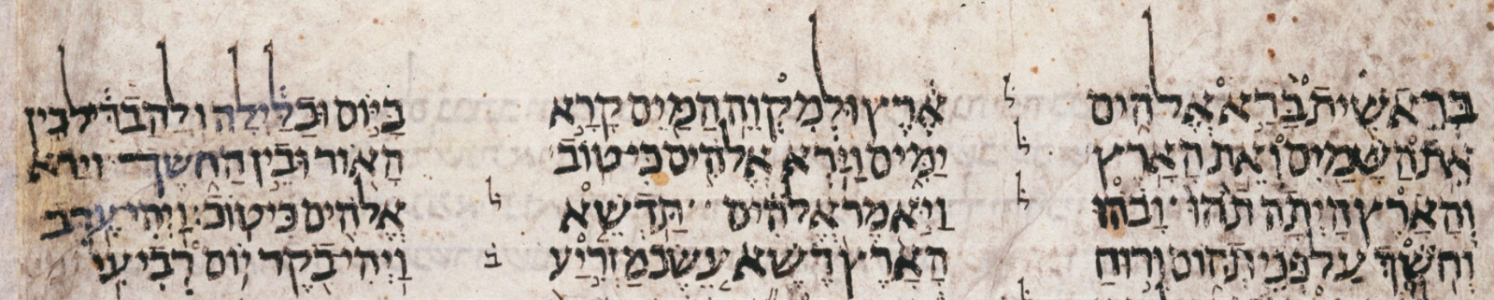
I’ve taken another liberty here, in that I have translated the specific Hebrew verb “to rise” into English using the contextually specific term, “dawn.” I’m convinced that’s the image that the Prophet is painting here, as attested by other modern English translations as well. These are words of hope, addressed to the people of God living in Jerusalem. But notice…who is the sun in this word picture? Who is the light that has come, that can be seen rising in the sky above Jerusalem? It’s God, the Lord himself! Now hold that thought…
He was the true light, the one who shines on all humankind, coming into the world. He came to his own, and his own did not receive him. But whoever did receive him, to them he gave authority to become children of God, to those who believe in his name.
John 1:9,11-12
Therefore, again Jesus said to them, “I am the light of the world; the one who follows me shall not walk in darkness, but shall have the light of life…For judgment I have come into this world, so that those who do not see may see, and those who do see might become blind.”
John 8:12, 9:39
These words of Scripture are familiar to the Christian, and rightly so. So familiar, in fact, that I think we as modern readers often take for granted the image being used here, both by the Evangelist (writing the Gospel account) and by Jesus himself. What is the light of the world? It’s a common concept in ancient Near Eastern literature, and any first-century Jew would have known immediately the answer: the sun. The sun shines on all humankind. The sun provides the earth with the light of life. The sun is the light that enables us to see––enough to do productive work, at any rate; can you imagine trying to grow food without sunlight?––yet the sun can, quite literally, blind us.
Do you see the clever wordplay Jesus employs? He compares himself to the sun, which can either illuminate or blind. Jesus freely offers himself as the light of life to all humankind. But the ancient Jew, culturally steeped in the literature of the Old Testament, would have understood the astounding claim Jesus implicitly makes here. In comparing himself to the sun, Jesus equates himself with the Lord, the God of the Old Testament. The light imagery in the Gospels is shot through with the sun imagery found in the Hebrew prophets, especially Isaiah. The ancient Israelites anticipated that God would one day come dwell on earth with humankind, and they saw the dawn as an expression of this hope. Dawn is ever the hope of men. Then Jesus arrives on the scene and proclaims, “Here I am!”
* ~~~~~ * ~~~~~ *
This is a night as long as years. How long will the day tarry?
Have you ever spent a night like that? I know you have, and so have I. Perhaps you are in the midst of such a night right now. If not, you will be soon. After all, nights are as regular an occurrence as days. In this life, the night is never far away. Sooner or later, every one of us passes through seasons where all we can pray is, “O Lord Jesus!” If we can pray at all, that is. The Scriptures tell us that darkness covers the nations, and thick darkness the peoples. Surely you have felt it! You don’t need me to tell you that it’s the truth.
But there’s another truth, too. His name is Jesus – the only Son of God, eternally begotten of the Father, God from God, Light from Light, true God from true God. He shines in the darkness, and the darkness cannot overcome Him (John 1:5). The Scriptures also tell us that weeeping may endure for a night, but joy comes in the morning (Psa 30:5). Surely you have felt that, too! How? Why? God created the heavens and the earth and the universe, evening then morning (Gen 1:5). The order is intentional, so that we might know that first comes the night, but afterward the dawn. For the one who believes in Jesus, the rising of the sun each day is the harbinger of eternity, the sign of the promise of resurrection, the guarantee that evil and darkness will not, in the end, prevail. Because when we look out to see the dawn each new day, we know that God has kept his promise yet again. The sun came up this morning, did it not?
Dawn is ever the hope of men.
The magic of Aragorn’s dawn is not only fantastic literary imagery. It’s the real truth. I think that’s the whole point that Tolkien was trying to make, and Jesus, too. We hope because we see the Son rising, even though we do not yet see the Son.
But one day…
A Prayer for the Dawn:
This is another day, O Lord. I know not what it will bring forth, but make me ready, Lord, for whatever it may be. If I am to stand up, help me to stand bravely. If I am to sit still, help me to sit quietly. If I am to lie low, help me to do it patiently. And if I am to do nothing, let me do it gallantly. Make these words more than words, and give me the Spirit of Jesus. Amen.
The Book of Common Prayer (Episcopal), p.461
 Reading the Old Testament