
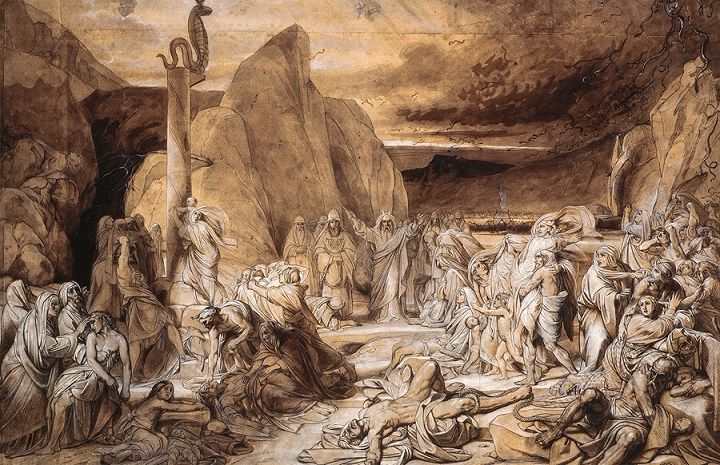
For the Christian, there are some moments of utter beauty in the Old Testament where the atoning death and/or victorious resurrection of Jesus is prefigured with astounding clarity. The story of the bronze serpent on the pole in the wilderness is one of these vignettes. But the story doesn’t stand alone; rather, it comes at the end of a series of episodes which transpire while the Israelites are on the 40-year trek through the desert from Mt Sinai to the Plains of Moab. Those who walk a journey of faith with God sometimes say, Believing is Seeing, a play on words of the popular modern sentiment, Seeing is Believing. But for those Israelites, to see the elevated figure on the wooden apparatus really was to believe: “Yes, that is for me!”
Suggested Reading: Numbers 11-21
Lecture: The Bronze Snake in the Wilderness [43 mins]
This lecture was recorded in Apr 2016 for the Zion Evangelical Bible School in Khayelitsha, South Africa.
 Reading the Old Testament