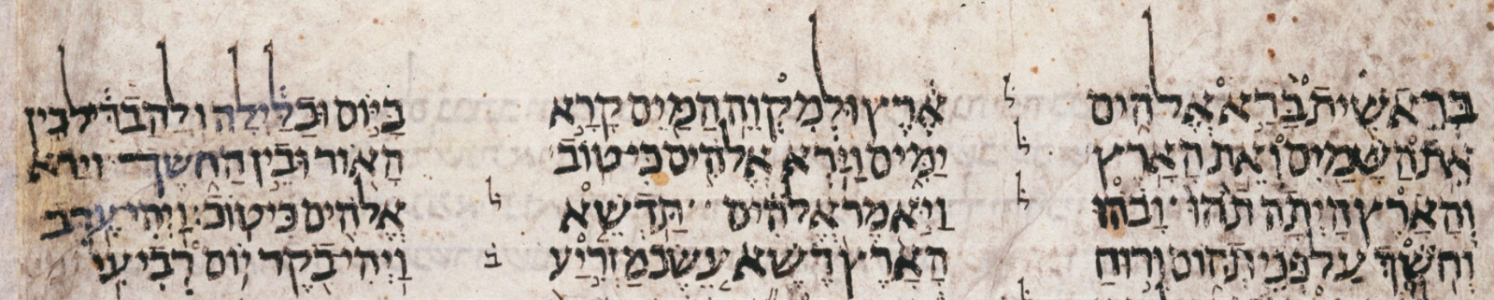
“You are what your record says you are”

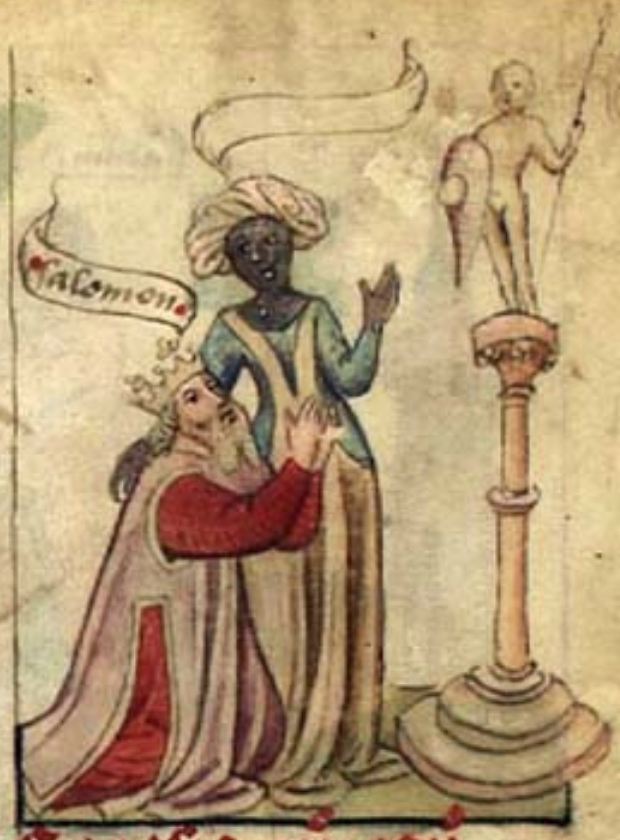
King Solomon and the Queen of Sheba, from a manuscript of Speculum Humanae Salvitionis [c.1430]

Of course, many, many people are aware of the “Ten Commandments.” But did you know that, in the Old Testament, God also gave “Ten Guidelines” specifically for the king of Israel? It’s true! You can find them in Deut 17:14-20. [And really, it’s not bad advice for anyone, even in modern times!] In the books of Kings in the Old Testament, all of the kings receive an evaluation: either he “did what was right in the eyes of Yahweh” or he “did what was evil in the eyes of Yahweh.” Have you ever wondered what the actual “measuring stick” was for these pass/fail judgments?

[The lecture is not accurate in one aspect…there are eight good kings of Judah instead of five. I missed Joash, Amaziah, and Jotham.]

Lecture: Solomon and the Kings [64 mins]

This lecture was recorded in August 2016 for the Zion Evangelical Bible School in Khayelitsha, South Africa.
One Sinner Who Repents

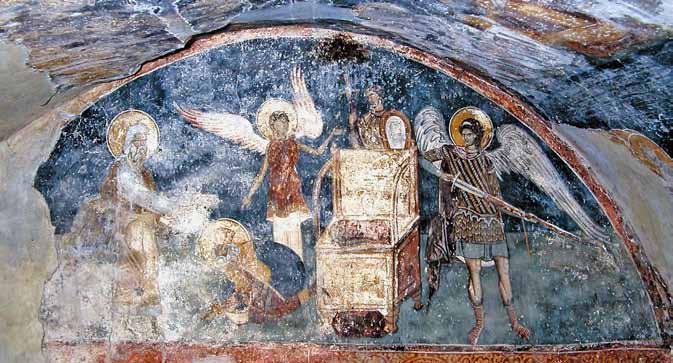
The Repentance of King David, at The Church of St. Sophia in Ohrid, Macedonia [c.1345]

Yes, in some ways, King David was worse than King Saul, and he reaped what he sowed. But he repented. And that’s the whole point of being “a man after God’s own heart.”

Confession, not excuses. Repentance, not perfection. Absolution, not judgment. Still, the consequences of all of our actions remain. Because God is perfectly righteous and just, and yet, his nature is always to have mercy…

Lecture: David, the Covenant King [42 mins]

This lecture was recorded in July 2016 for the Zion Evangelical Bible School in Khayelitsha, South Africa.
Prelude to the King

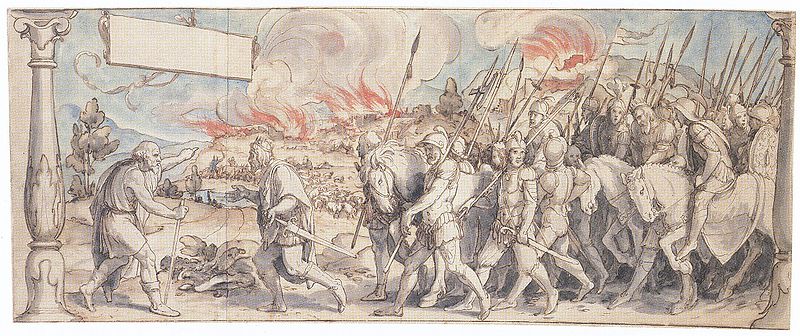
Samuel Cursing Saul, by Hans Holbein the Younger [c.1525]

So the Israelites leave Egypt and come to the land they would eventually claim as their own, scratching out a living as a confederation of tribes with no central government. The book of Judges ends with a somber analysis of this state of affairs: “Each person did what was right in their own eyes.” The people bellyache for a king, so God gives them a king; naturally, the guy who is head-and-shoulders taller than everybody else. Things go from bad to worse. God predicts that the king will let his power go to his head, and that’s exactly what happens. So eventually, God says that He will choose a new king…

…except that king does some even worse things than the first one. What ARE you thinking, God?!?

Lecture: Samuel and the Judges [52 mins]

This lecture was recorded in July 2016 for the Zion Evangelical Bible School in Khayelitsha, South Africa.
When “Seeing” Really Was “Believing”

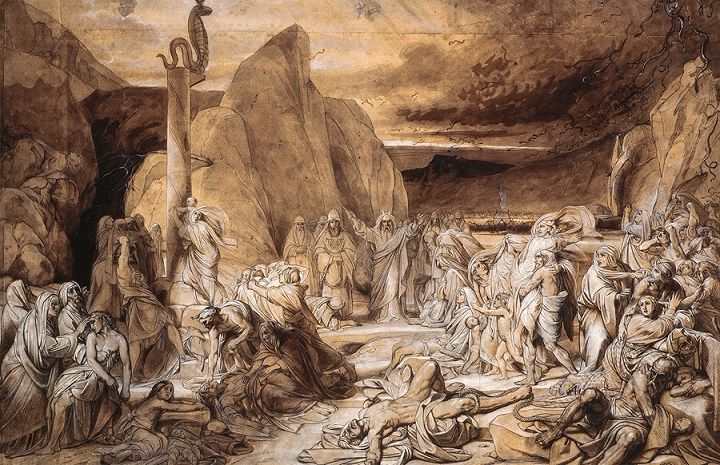
The Copper Serpent, by Fyodor Bruni [1839]

For the Christian, there are some moments of utter beauty in the Old Testament where the atoning death and/or victorious resurrection of Jesus is prefigured with astounding clarity. The story of the bronze serpent on the pole in the wilderness is one of these vignettes. But the story doesn’t stand alone; rather, it comes at the end of a series of episodes which transpire while the Israelites are on the 40-year trek through the desert from Mt Sinai to the Plains of Moab. Those who walk a journey of faith with God sometimes say, Believing is Seeing, a play on words of the popular modern sentiment, Seeing is Believing. But for those Israelites, to see the elevated figure on the wooden apparatus really was to believe: “Yes, that is for me!”

Suggested Reading: Numbers 11-21

Lecture: The Bronze Snake in the Wilderness [43 mins]

This lecture was recorded in Apr 2016 for the Zion Evangelical Bible School in Khayelitsha, South Africa.

When you burn meat, it stinks

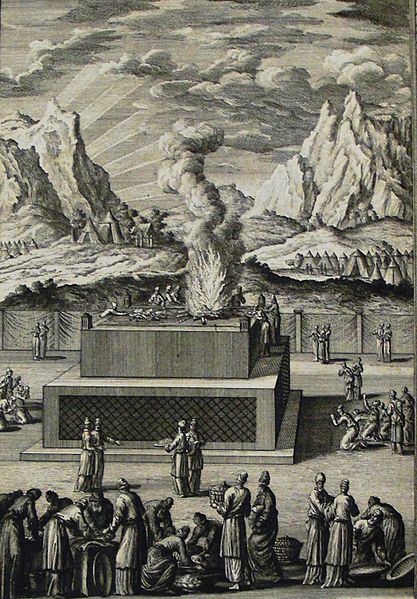
Burnt Offering, by Phillip Medhurst [1970]
from the Collection of Bible Illustrations, CC by-SA 3.0

In the ancient Israelite sacrificial system, God commanded the Israelites to offer burnt offerings as a “sweet-smelling aroma” to Him. Which works just fine if burning incense, like the priests did inside the tabernacle, on a specific altar for this very purpose. But that’s not what a “burnt offering” was. A burnt offering was where a cow (or some other animal) was burned with fire on the huge altar outside of the tabernacle. And when you burn meat in a fire, it doesn’t smell sweet at all. In fact, it stinks. Clearly, God has lost His marbles…or perhaps not?

Suggested Reading: Leviticus 1-7, 16, 19

Lecture: God’s Law for the Israelites [43 mins]

This lecture was recorded in Apr 2016 at the Zion Evangelical Bible School in Khayelitsha, South Africa.

A Pre-Christian History of Light

OLYMPUS DIGITAL CAMERA

“So again Jesus spoke to them, saying, ‘I am the light of the world.'” – John 8:12

The physical phenomenon of light is one of the most primitive of all human experiences but remains strangely mysterious to physicists and philosophers alike…even theologians.  The apparent inconsistency of daylight being created before the sun in Genesis 1 continues to perplex each new generation of biblical scholars, both Jewish and Christian.  And yet, the Johannine literature of the New Testament expounds light––as grounded in the book of Genesis––as one of the primary conceptual metaphors for both God and Jesus.  This presentation aims to bridge the gap by tracing some prominent themes regarding the theological use of light in ancient Israelite religion and culture, culminating in the famous claim of Jesus of Nazareth: “I am the light of the world.”

Audio:  “Jesus Christ, the Light of the World: A Pre-Christian History”    [slideshow]

This audio lecture (with Q&A)  is 58 minutes in length, and was recorded on 26 Apr 2019 for TGIF Stellenbosch at Stellenbosch, South Africa.

Where there’s smoke, there’s fire

Screen Shot 2018-04-02 at 8.12.19 PM

God’s Covenant with Abraham, by Jan Goeree & Abraham de Blois [c.1700]

In the OT, God appears in some peculiar and puzzling ways: in Genesis 15, as “a smoking oven and a burning torch.”  Why does God appear as smoke and fire in this story?  Truthfully, I have no idea –– and this is an important aspect of reading and understanding an ancient text that comes from a foreign culture.  There are many things that are unknown to us, many things that we can’t explain.  And it’s OK not to have all the answers to everything.  In fact, I believe that the mystery of the Bible is a central aspect of its enchantment and allure.  All that being said, however, what is important about God’s covenant with Abraham is not how God appeared but rather what God did when making the covenant with him.  As St Paul would explain many centuries later, God’s righteousness is not a paycheck––that is, payment for services rendered––but rather a gift freely bestowed on us when we believe God’s promise, no matter how improbable, or impossible, it may seem.

Suggested Reading: Genesis 15, Genesis 2-3

Lecture: Abraham the Covenant Patriarch [58 mins]

This lecture was recorded on 12 Mar 2016 at the Zion Evangelical Bible School in Khayelitsha, South Africa.
A literary smorgasbord

kushner_job_092712_620px
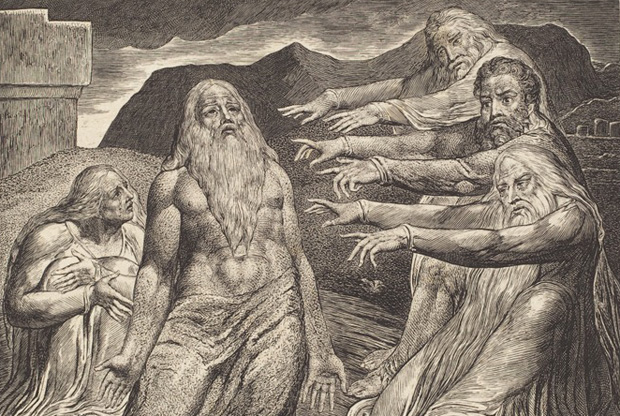
Job Rebuked by His Friends, by William Blake [1825] 

Lecture: A Brief Introduction to OT Literature [29 mins]

One of the main challenges for modern readers approaching the OT stems from the fact that the specific books come to us not as individual works but as a composite literary collection.  However, generally speaking, there is nothing in a standard Bible that signals the various literary genres that appear in either the OT or NT.  Rather, it is left up to the reader to decipher these for themselves.  In this lecture, I give an overview of the various kinds of literature in the OT and explain the rationale for the arrangement of the OT books in a standard published Bible.  I use the book of Job as a case study to explain why these factors are important for reading, understanding, and applying biblical literature.

This lecture was recorded on 13 Feb 2016 at the Zion Evangelical Bible School in Khayelitsha, South Africa.
When God begins a “relationship”…

Noah.thank.offering.2

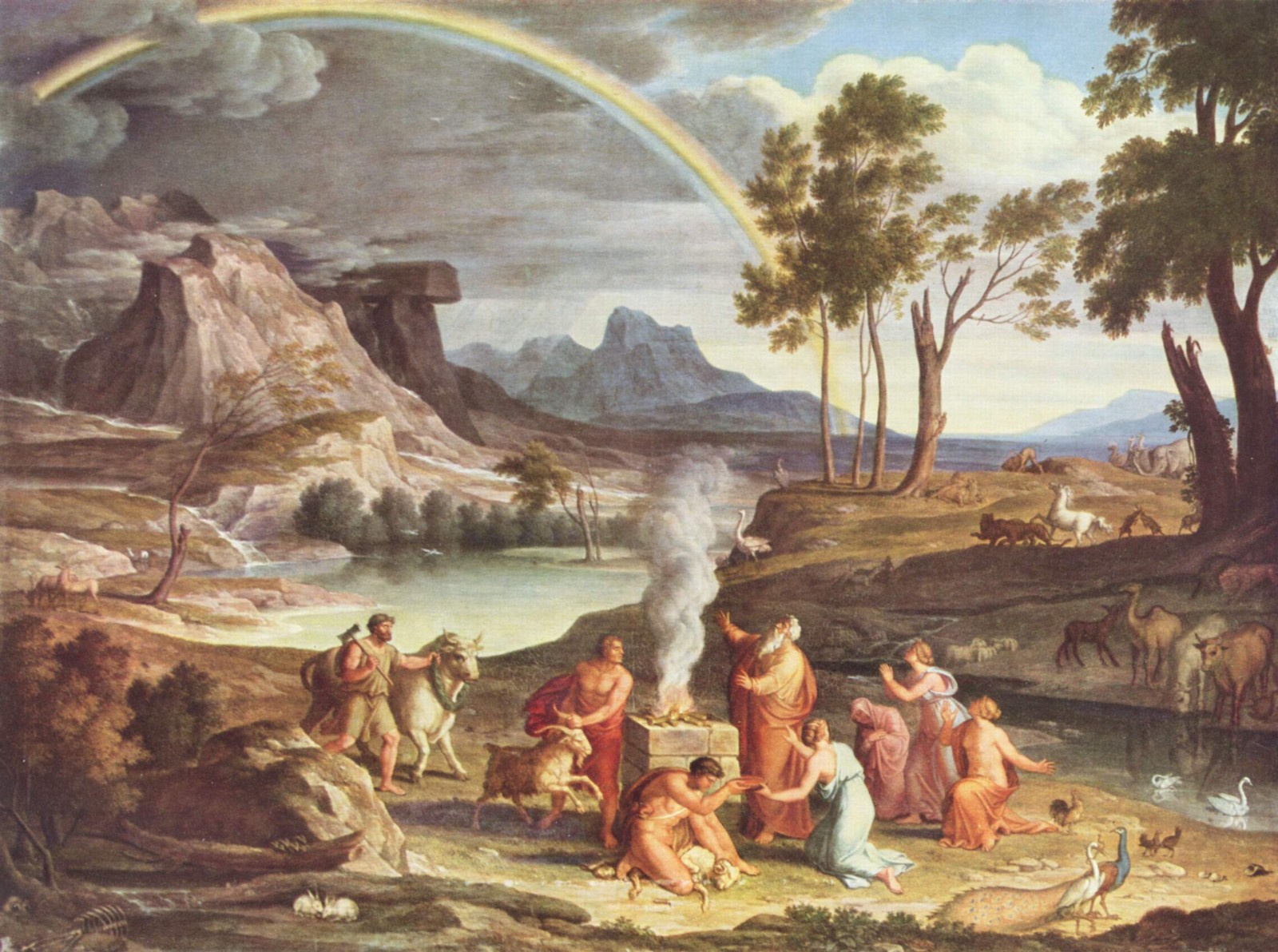
Noah’s Thank Offering, by Joseph Anton Koch  [1803]

When we speak about the concept of “covenant” in the Old Testament, essentially we are talking about romance.  It’s a romance that includes the making of promises and giving tokens of pledge, symbolic gestures of love and faithfulness, and in some cases, even threats of punishment for infidelity.  A “covenant” in the Bible is rather like what we today call “marriage” –– with sexual overtones even if the specific covenant does not include sexual privileges.  One of the major narrative threads of the entire OT is God making a series of covenants with the Israelites, covenants that find their ultimate expression and fulfillment in the person of Jesus of Nazareth.

Lecture: An Overview of the Biblical Covenants [39 mins]

Eventually, I hope to begin an actual “podcast” (on iTunes and such) to stream audio content from this blog, but in the meantime, I will begin posting a series of lectures I gave in 2016.  These lectures cover major plot points and some literary features of the biblical narrative from Genesis through Nehemiah.  In this first episode, I offer a brief overview of the covenants of the OT and how they are fulfilled in Jesus.  This series of lectures was given to students at the Zion Evangelical Bible School in Khayelitsha, South Africa, as part of a four-year training program for pastors and church leaders.